

PASSPORT TO COFFEE EXPORT (PACE)
PASSPORT TO COFFEE EXPORT (PACE)

2005
PASSPORT TO COFFEE EXPORT (PACE) was a 42-month project implemented by ENVIROCARE in collaboration with Solidaridad Tanzania and the Tanzania Coffee Research Institute (TaCRI) in Mbeya, Songwe and Ruvuma Regions. The project was implemented as part of the AGRI-CONNECT programme and focused on strengthening an inclusive and export-oriented coffee value chain.
The project aimed to improve coffee productivity, climate-smart and nutrition-sensitive agriculture, gender inclusion, youth and women’s economic empowerment, value addition and access to markets. It targeted 22,500 smallholder coffee farmers, with women and youth making up 52% of the target.
What We Did
ENVIROCARE trained farmers and extension workers on Good Agricultural Practices (GAP), Climate Smart Agriculture (CSA), renewable energy and nutrition-sensitive agriculture. During the reporting period, 402 lead farmers and 88 extension workers received additional training, bringing the total number of trained extension workers to 200.
Through lead farmers and field officers, 17,420 farmers were reached with training on climate change and nutrition-sensitive agriculture, while 2,008 community members participated in sensitization campaigns.
The project also promoted gender inclusion and women’s participation in the coffee value chain through EA$E and EMAP methodologies. 1,748 women from VSLA groups received training on gender, decision-making, women’s rights, household responsibilities and prevention of violence against women and girls.
To strengthen economic empowerment, ENVIROCARE supported 75 VSLAs and provided entrepreneurship and business development support. By July 2023, the groups had accumulated TZS 230.8 million in savings and TZS 44.4 million in social funds.
In addition, 148 youth and women from 25 incubation groups were trained in diversified enterprises including coffee soap and beauty products, Batiki, livestock keeping and coffee farming.
Project Impact
The project contributed to improved knowledge, productivity, resilience and economic opportunities among coffee-growing communities. Farmers gained skills in climate-smart and sustainable farming, while women and youth increased their participation in income-generating activities.
VSLA groups used savings and loans to invest in small businesses, coffee farms, livestock, education, health and household improvements. Some groups also established collective enterprises such as fish farming, soap production and coffee nurseries.
Youth enterprises demonstrated practical economic growth. For example, Kahawa Kwanza Youth Group in Ruvuma purchased one acre of land using their own funds to establish a coffee farm, while Shitulano Group in Songwe produced coffee soap and sold 62 pieces worth TZS 105,000 at the Nanenane exhibition.

Lasting Contribution
PACE strengthened the capacity of farmers, extension workers, women and youth to participate more effectively in the coffee value chain. It also promoted climate resilience, gender equality, nutrition, entrepreneurship and value addition, creating opportunities for more sustainable livelihoods and a stronger Tanzanian coffee sector.
Lead farmers from Mbozi Dc trained on charcoal making using left over papers and charcoal dust


Manager of MBIFACU and overseer of farms Hendrick Ndimbo giving a detailed
explanation on coffee agronomy practically to Extension workers

Nutrition Officer from Mbozi Dc Ms. Zainab train extension workers
from Mbozi DC on Nutrition Sensitive

One of the participants from Mbeya DC taking BMI measurement (Height and Weight) during training session on nutrition sensitive

Mr. Amos Mbwambo from Envirocare explaining nutrition matters to students from Nsongwi Juu Secondary School, Ijombe- Mbeya DC who visited Agri-connect podium during Nanenane exhibitions in Mbeya.

Gender champions from Mbeya DC in group discussion during the training held at Mbimba TaCRI
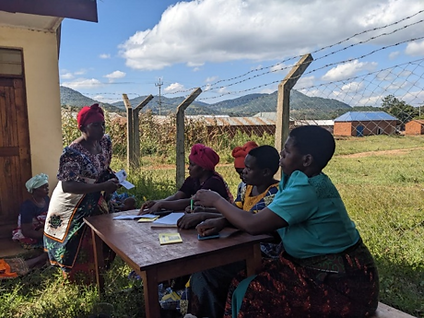

Savings, loans, social fund collection meeting at Tuamke Izyira VSLA group From Mbeya DC


Livestock keeping owned by Neema Mwashiuya from Tulipoka VSLA group of Itepula AMCOS, Mbozi DC

Women members of Msamala Women Group excavating their own local pond for fish farming

Members from 5 incubation groups from (Mbozi DC) at TaCRI – Mbimba
Songwe region trained on Livestock Keeping, Batiki Making and Soap Production

Ms. Saraphina Mlowe facilitating youth and women on Batiki Making in Mbinga, Ruvuma region

Ms. Lucy Muro from Envirocare facilitating youth and women on production of coffee soap